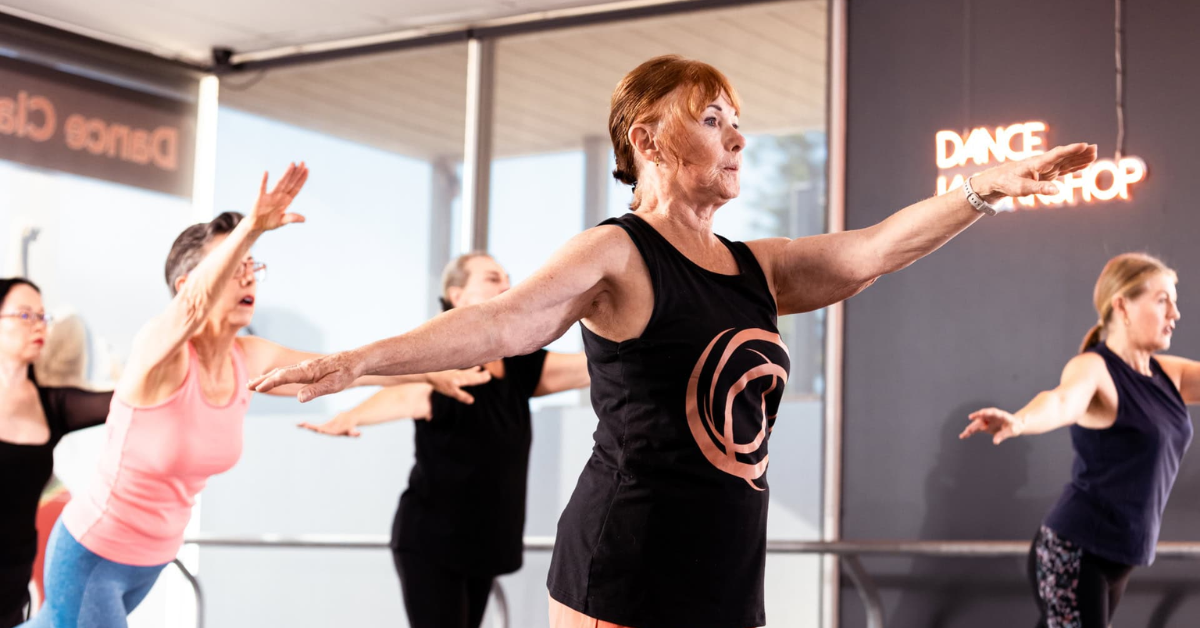
If you’ve ever watched an older Australian step into a dance class for the first time, you’ll know there’s something a little magical about it. Not the loud, glittery sort. More like a gentle shift in the air. A soft straightening of the spine. A quiet, almost shy smile. This is the beginning of something that often surprises people. Because Dance For Older People isn’t just movement, it’s confidence finding its way back in—bit by bit.
Healthy ageing has become this big, clinical phrase in Australia. Feels like something you’d hear in a brochure at a GP clinic. But real people don’t talk like that. They speak about sore knees, missing friends, feeling a little stuck at home, or wanting to feel lighter in their own skin again. And somewhere in the middle of all that, dance has wandered in. Not loudly. Not as a trend. Just as an accessible, joyful, oddly grounding way to move through later life.
And honestly, it’s working.
Why Dance Feels Different
Ask anyone who teaches Dance For Older People, and they’ll probably say the same thing. Older adults don’t show up for the exercise. Not really. They come for connection. And maybe a bit of nostalgia. And sometimes for the simple joy of doing something that isn’t another medical appointment.
The beautiful thing about dance is that it doesn’t demand perfection. A wobbly balance moment? Everyone chuckles and carries on. Forget the step? Doesn’t matter. The rhythm keeps moving, and so do you. There’s this permission to be imperfect that many older Australians say they haven’t felt in years.
That alone shifts something deeper than muscle tone.
The Surprising Science
Sure, research is stacked with reasons to support Dance For Older People programs. Improved balance. Better coordination. Stronger legs. Sharper memory. Reduced risk of falls. A happier mood. You’ve probably heard all of that before.
But the real-world version looks more like this.
Someone in their late seventies remembers a whole sequence they thought they’d forget. A man recovering from hip surgery is finally trusting that leg again. A woman who lost a spouse a year ago, laughing at something silly in class and realising, Oh, I needed that.
That’s what cognitive stimulation looks like off the page. That’s what improved mobility feels like in the moment—a small victory disguised as a sidestep.
The Social Side (Which Might Be the Biggest Part)
Loneliness can creep into older age quietly, even if someone has family around them or lives in a lovely retirement community. It’s not about proximity. It’s about connection. Something older adults don’t always feel comfortable admitting.
Dance classes create a connection without forcing it. No awkward icebreakers. No heavy conversations unless people want them. The movement does the warming up. People fall into easy chatter during breaks. Names get remembered. Stories come out—a small community forms almost without trying.
For many participants, Dance For Older People becomes the anchor of their week. A reason to get out the door. A place where they feel seen without being scrutinised.
The Australian Twist
We do things a bit differently in Australia. Maybe it’s the relaxed attitude or the sense of humour. But Dance For Older People programs here tend to have their own flavour.
There’s the ballroom class in a local RSL hall where people show up early just to gossip. The cultural dance groups in Western Sydney that mix traditional movement with modern tracks. The chair-based classes in regional towns where participants bring homemade biscuits to share. The Parkinson’s focused programs run by allied health teams in Melbourne and Adelaide. Every one of them is shaped by community.
And because these programs keep growing, more older Australians are realising that dance isn’t only for the young or the fit. It’s for anyone who wants to move through ageing with a little more ease—a little more joy.
Movement That Adapts, Rather Than Demands
I’ve met instructors who can read the energy of a room better than most people read a book. They’ll change a routine on the spot if the class is tired. Slow everything down. Add more seated work. Turn a high-energy track into something soft and floaty because Dance For Older People isn’t about pushing through pain. It’s about keeping movement safe, sustainable, and enjoyable.
And when participants realise that they don’t have to “keep up,” they relax. Shoulders drop. Steps become smoother. People move how they can, not how they think they should. That’s the real moment progress begins.
Stories That Stay With You
One woman, mid-eighties, once said, “I come here to remember that I’m still me.” And you could feel the weight of that. Dance for Older People does that for many people. It offers a space where age is just a number in the background. The person — their personality, humour, spark — becomes the focus again.
Another participant admitted she hadn’t felt confident walking outdoors for months after a fall. After a few classes, she started walking to the shops again. “The steps in class made me trust my feet,” she said—such a simple sentence, yet such a massive shift.
These stories are everywhere. You just have to sit in the corner of a class for five minutes to see them unfold.
A Quiet But Powerful Reframe
Maybe the real magic of Dance For Older People lies in its unassuming nature. No big declarations about transforming your life. No strict programs. Just music, movement, and people trying something a little brave together.
Healthy ageing doesn’t have to be rigid or clinical. Sometimes it’s a shuffled step. A stretch of the arms. A shared laugh. Movement that reminds someone their body can still surprise them.
And for many, that’s enough to change how they feel about the years ahead.
Final Thought
Dance for Older People at Brighton Recreational isn’t a trend. It’s a gentle revolution happening in community halls, aged care centres, church basements, and Zoom screens across Australia—one small, joyful step at a time.
If you’d like, I can rewrite this in a more localised tone, add a specific location (like Melbourne, Brisbane, Sydney), or personalise it for a particular organisation.
Stay in touch to get more updates & alerts on TubeGalore! Thank you