Table of Contents
- Common Types of Recyclable Brass
- Identifying Brass for Recycling
- Common Sources of Recyclable Brass
- Preparing Brass for Recycling
- Environmental and Economic Benefits
- Final Thoughts
Recycling brass helps conserve natural resources and supports environmental and economic sustainability. If you have old fixtures, hardware, or other brass items at home or at work, learning about the types of brass and how to identify them ensures you get the best returns for your effort. To further understand current values, refer to this brass scrap price guide for plumbing fixtures and hardware to estimate the value of your scrap.
Brass is a versatile alloy valued for its corrosion resistance, durability, and attractive appearance, making it a popular choice in plumbing, marine hardware, and musical instruments. Knowing how to sort, prepare, and identify brass correctly can maximize both the environmental impact and the financial benefit of recycling.
Separating genuine brass from similar-looking metals and understanding what types are most valuable can significantly improve your recycling experience. This article details the main types of recyclable brass, how to identify them, common sources, best preparation methods, and the benefits you can expect from recycling your brass items.
Common Types of Recyclable Brass
Brass is made primarily from copper and zinc, but the proportions and trace elements result in different types of brass alloys. Understanding these variations can help you sort your scrap effectively:
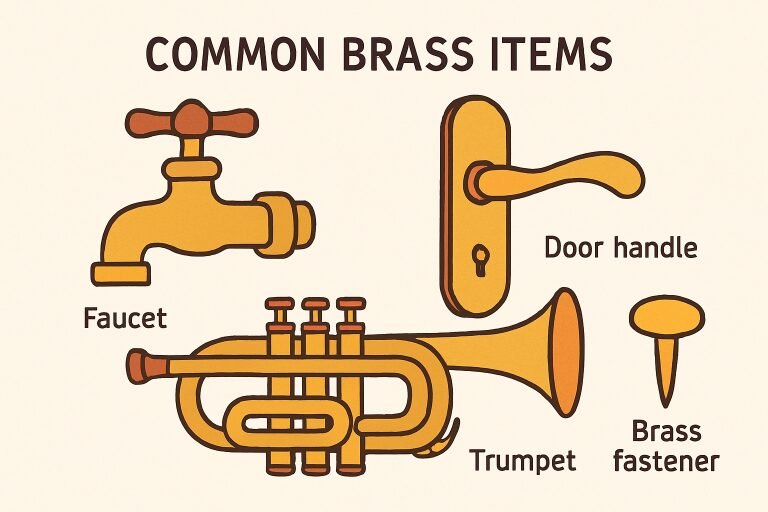
- Yellow Brass: With its bright gold tone, yellow brass is composed of 60-70% copper and 30-40% zinc. It’s commonly used in plumbing fixtures, door handles, and musical instruments due to its relatively high corrosion resistance and malleability.
- Red Brass: Also known as gunmetal, red brass has a higher copper content (approximately 85%), resulting in a distinct reddish hue. You’ll find this variety in marine components and specialized plumbing parts that need greater corrosion resistance.
- Cartridge Brass: Typically composed of 70% copper and 30% zinc, cartridge brass is strong but easy to machine. It is used for ammunition casings and a range of fasteners.
- Admiralty Brass: By incorporating small amounts of tin, admiralty brass enhances its durability in saltwater, making it an ideal choice for condenser tubes and other marine applications.
- Naval Brass: With even more tin than Admiralty Brass, Naval Brass handles marine environments and high-pressure applications extremely well, and is commonly seen in shipbuilding.
Identifying Brass for Recycling
Recognizing brass from other alloys and metals is essential. Here are reliable identification methods:
- Color Observation: New or polished brass shines a yellow-gold, while aged brass may appear dull or have a browner tone. Color alone is a helpful—but not definitive—indicator.
- Weight Comparison: Brass is significantly heavier than materials such as aluminum or tin, so comparing the weight of items side by side can reveal clues to their identity.
- Magnet Test: Brass is not attracted to magnets. If a strong magnet doesn’t stick, you may have found a piece of brass.
- Scratch Test: Scratching a discreet spot will reveal a yellow or gold streak beneath any surface tarnish or patina, a telltale sign of brass composition.
If you’re dealing with a mixture of scrap metals and want to maximize your haul, accurately identifying and sorting these metals is crucial. Leading authorities have guides on distinguishing between non-ferrous and ferrous metals that may be helpful.
Common Sources of Recyclable Brass
Once you know what brass looks and feels like, look for these common sources to gather scrap for recycling:
- Plumbing Fixtures: Old faucets, valves, and pipe connectors are frequently made of solid brass, particularly in older homes.
- Door Hardware: Doorknobs, locks, and cabinet hinges are often made from brass for their durability and attractive appearance.
- Musical Instruments: Trumpets, trombones, and several woodwind instruments are usually made of specialized brass alloys.
- Decorative Items: Home décor items, such as candlestick holders, figurines, or vintage trays, are often made of solid brass or heavily plated.
- Electrical Components: Brass is a popular choice for connectors, switches, and electrical terminals due to its conductivity and resistance to corrosion.
Preparing Brass for Recycling
For the best return and to help recycling centers out, prepare your brass before dropping it off:
- Remove Non-Brass Materials: Strip away steel fasteners, hinges, rubber seals, and plastic parts. Mixed metals often lower the overall value of your brass scrap.
- Separate by Brass Type: Red and yellow brass have different values. Whenever possible, store them in separate containers to ensure you get the best payout.
Environmental and Economic Benefits of Recycling Brass
Recycling brass offers significant environmental rewards. Each pound of recycled brass reduces the need for new mining operations, thereby conserving energy, protecting natural resources, and lowering greenhouse gas emissions compared to primary production. Economically, brass fetches a relatively high price at most scrap yards, translating to real financial benefits for recyclers and contributing to a circular economy in the metals industry.
Final Thoughts
Whether you’re clearing out old household hardware, helping a friend recycle, or running an industrial operation, separating and preparing brass for recycling is a win-win for the environment and your pocketbook. Understanding the different brass types, knowing how to accurately identify them, and taking a little extra time to sort and clean your scrap will help you maximize the returns from your recycling efforts and contribute to a greener future.