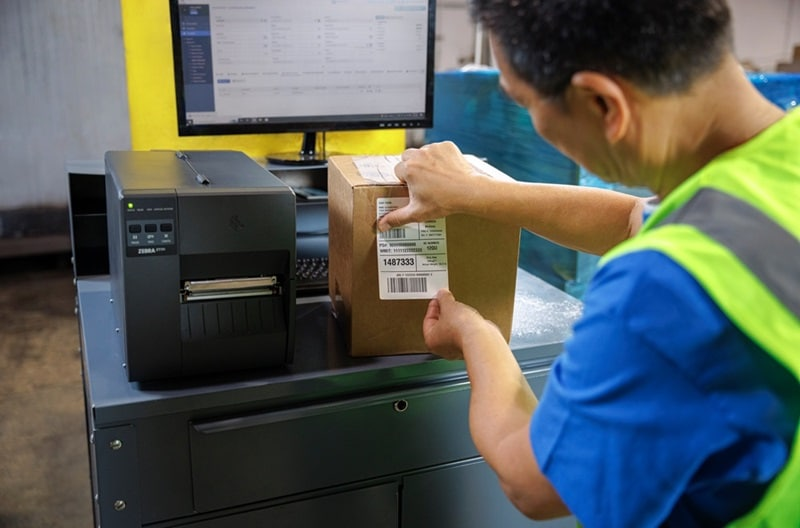
Standardization reduces emergency substitutions, template errors, and local purchasing variation. The goal is not one label for every task, but a controlled set of approved items matched to defined applications. The purpose of this guide is to help multi-site distributors, third-party logistics providers, and growing fulfillment networks make a decision that can be tested, documented, and repeated.
Buyers comparing warehouse labels should begin with the application and printer requirements, then narrow the available constructions. A category page can help identify options, but the final choice still needs a specification and a representative trial.
Inventory Printers and Applications
Different sites often use printers purchased at different times for shipping, receiving, put-away, picking, returns, and asset identification. Hidden differences prevent simple consolidation. A representative trial is especially useful for inventory printers and applications because a catalog description cannot reproduce the complete environment. Use normal equipment, materials, timing, and handling instead of an ideal desk demonstration.
Create a register with printer model, resolution, print method, sensor, media path, application, daily volume, and current label SKU. Photograph each media setup and identify unsupported local workarounds. Record the result in the approved item file so the same decision does not have to be rediscovered after a staff, printer, or supplier change.
Create a Small Approved Catalog
Too many near-duplicate label sizes increase stock, training, and substitution risk. Too much consolidation can force one construction into environments it cannot handle. For this part of standardize thermal labels across multiple warehouses, consistency matters more than an impressive one-time result. The approved approach should work across the roll, across shifts, and across the range of conditions defined by the business.
Group applications by common size, adhesive, service life, and printer. Keep separate SKUs where risk is real, and publish a visual catalog showing the approved use for each item. Record the result in the approved item file so the same decision does not have to be rediscovered after a staff, printer, or supplier change.
Control Templates and Settings
A standard roll can still fail if page dimensions, orientation, darkness, speed, or sensor mode differ. Local template copies tend to drift over time. Writing down the requirement for control templates and settings also reduces substitution risk. Buyers can compare like with like, while operators can recognize when a delivered construction or setting differs from the approved item.
Store master files centrally, name them by media SKU and printer resolution, and restrict editing. Include a test label and configuration sheet for every approved combination. Record the result in the approved item file so the same decision does not have to be rediscovered after a staff, printer, or supplier change.
Use Site-Level Qualification
A media sample approved at headquarters may encounter different cartons, humidity, scanners, or work practices elsewhere. Small environmental differences can reveal weaknesses. Evidence for use site-level qualification should identify the media lot, printer, settings, substrate, environment, and outcome. That record turns a vague complaint into a problem the supplier and operations team can investigate efficiently.
Require each representative site to run the proposed item during normal operations. Collect the same measures: feed errors, scan success, adhesion, waste, operator comments, and changeover time. Record the result in the approved item file so the same decision does not have to be rediscovered after a staff, printer, or supplier change.
Plan Replenishment and Substitutions
Central purchasing improves leverage but can lengthen response time. An unapproved emergency substitute may create printer downtime or mislabeled shipments. This is a frequent source of hidden variation in standardize thermal labels across multiple warehouses. The most dependable control is a short specification supported by an approved sample and a test result that another location or employee can reproduce.
Set reorder points using site consumption and lead time, hold appropriate safety stock, and prequalify an alternate. State which specifications may vary and which are critical. Record the result in the approved item file so the same decision does not have to be rediscovered after a staff, printer, or supplier change.
Review Performance With Shared Data
Complaints described only as ‘bad labels’ cannot support corrective action. Comparable data helps separate media, printer, template, environment, and handling causes. The decision about review performance with shared data should be made before a large order is placed. Correcting the requirement on paper is inexpensive; correcting stocked media, interrupted production, or mislabeled goods is not.
Use one incident form with lot number, printer, settings, photos, failure rate, and substrate. Review trends quarterly and update the approved catalog when evidence justifies a change. Record the result in the approved item file so the same decision does not have to be rediscovered after a staff, printer, or supplier change.
A Practical Buying Checklist
- Inventory Printers and Applications: Create a register with printer model, resolution, print method, sensor, media path, application, daily volume, and current label SKU.
- Create a Small Approved Catalog: Group applications by common size, adhesive, service life, and printer.
- Control Templates and Settings: Store master files centrally, name them by media SKU and printer resolution, and restrict editing.
- Use Site-Level Qualification: Require each representative site to run the proposed item during normal operations.
- Plan Replenishment and Substitutions: Set reorder points using site consumption and lead time, hold appropriate safety stock, and prequalify an alternate.
When the specification for how to standardize thermal labels across multiple warehouses is clear, multi-site distributors, third-party logistics providers, and growing fulfillment networks can discuss it with a specialist source such as BETCKEY thermal labels and compare available formats without relying on guesswork. For this application, the supplier should confirm requirements related to inventory printers and applications and the buyer’s actual equipment; claims not shown in the written product data should be verified before purchase.
Frequently Asked Questions
What should a buyer verify about inventory printers and applications? Different sites often use printers purchased at different times for shipping, receiving, put-away, picking, returns, and asset identification. Hidden differences prevent simple consolidation. Create a register with printer model, resolution, print method, sensor, media path, application, daily volume, and current label SKU. Photograph each media setup and identify unsupported local workarounds.
What should a buyer verify about create a small approved catalog? Too many near-duplicate label sizes increase stock, training, and substitution risk. Too much consolidation can force one construction into environments it cannot handle. Group applications by common size, adhesive, service life, and printer. Keep separate SKUs where risk is real, and publish a visual catalog showing the approved use for each item.
What should a buyer verify about control templates and settings? A standard roll can still fail if page dimensions, orientation, darkness, speed, or sensor mode differ. Local template copies tend to drift over time. Store master files centrally, name them by media SKU and printer resolution, and restrict editing. Include a test label and configuration sheet for every approved combination.
Final Recommendation
The central lesson for multi-site distributors, third-party logistics providers, and growing fulfillment networks is straightforward: Standardization reduces emergency substitutions, template errors, and local purchasing variation. The goal is not one label for every task, but a controlled set of approved items matched to defined applications. Treat the selected label as a controlled part of the workflow, preserve the approved sample and settings, and review performance with evidence. That gives purchasing a fair basis for comparing price, service, and quality without sacrificing dependable printing, application, or scanning.