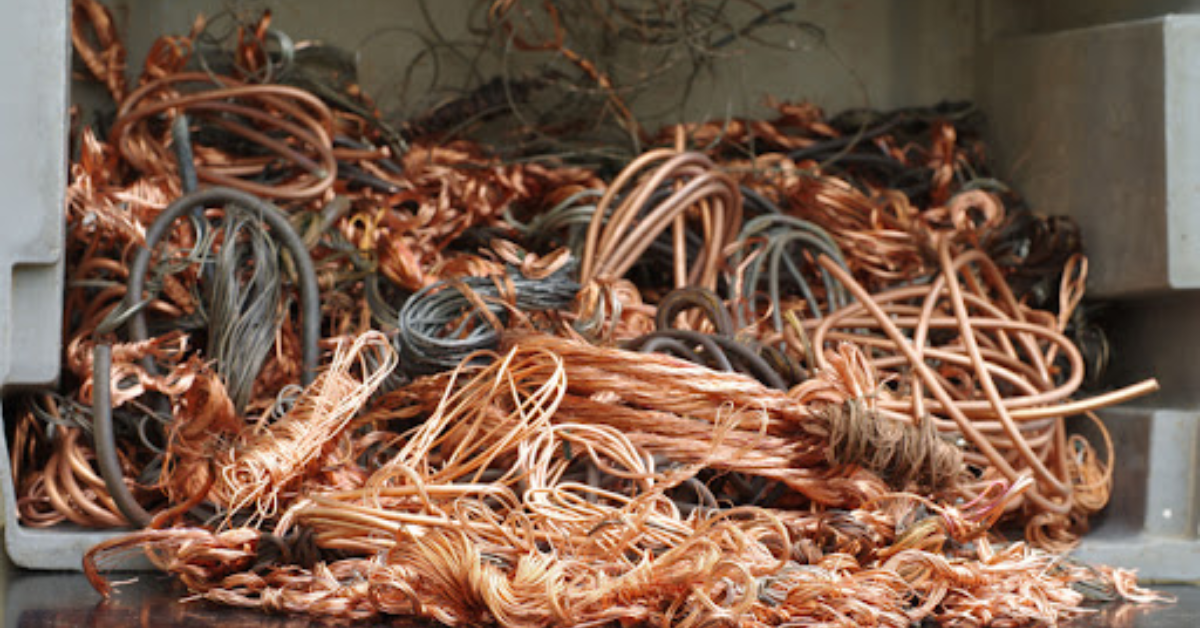
There is usually nothing glamorous about it. A coil of old cable sits behind a workshop door. A plumber has left several cut lengths of pipe in a battered crate. Someone clearing out a renovation has a bucket of fittings that seemed too useful to throw away but not useful enough to keep. “Just scrap it,” someone says.
And that is where copper scrap starts becoming interesting. What looks like leftover material can still have a place in a much larger industrial chain, one involving electricians, demolition contractors, metal processors, smelters, and manufacturers. In 2026, that chain is becoming harder to ignore as recycled copper takes a larger role in meeting global demand.
The Pile Tells You More Than The Label
Walk into a scrapyard, and the first lesson is that copper is not simply copper. A bright length of clean wire is one thing. Insulated cable is another. A piece of pipe with solder attached is different again. Add paint, corrosion, brass fittings or other metals, and the material becomes more complicated.
This is why copper scrap is generally assessed according to grade, cleanliness, and recoverable metal rather than simply its weight.
A senior non-ferrous metals recovery manager, Marcus Reid, puts it this way: “Two loads can contain roughly the same weight of copper but return very different values once insulation, solder, corrosion, and mixed-metal contamination are considered.”
That distinction matters for anyone clearing a workshop, demolition site or construction project. Tossing everything into one container may be convenient, but separating obvious copper types can make subsequent grading easier.
There is another reason to take the material seriously. Copper can be recycled repeatedly without losing its physical or chemical properties. The International Copper Association says more than 30% of annual copper demand has come from recycled sources over the last decade.
A Market That Is Quietly Changing
The global copper market has spent years talking about mines, new projects, and the enormous demand expected from electrification. Scrap has been part of that story all along, just less loudly. The International Copper Study Group’s April 2026 forecast puts secondary refined copper production from scrap on a stronger growth path.
Its forecast shows secondary refined production growing 5.7% in 2027, compared with 2.3% for primary refined production. The same forecast expects world refined copper production to grow only 0.4% in 2026.
That does not mean old cable is suddenly replacing copper mines. It means recycled material is becoming an increasingly useful source of supply when concentrate availability is constrained. It is an important difference.
The copper sitting in an old building, electrical installation or piece of industrial equipment is effectively part of an enormous above-ground resource. Once recovered, processed, and refined, it can return to manufacturing rather than disappearing into landfill.
Why Preparation Changes The Conversation
The person sorting a pile of wire on a Friday afternoon may not be thinking about global supply chains. They are usually thinking about space. “Can we just put all of this together?” Technically, perhaps. Practically, not always.
Insulated wire contains copper, but the plastic covering means additional processing is required. Clean copper pipe is more straightforward. Mixed loads can require sorting before their value is properly established.
The same principle applies to fittings. Removing obvious non-copper attachments where practical can make the material easier to classify, although workers should never dismantle electrical equipment in unsafe conditions simply to improve scrap value.
For businesses, especially electricians and contractors, this can become part of site housekeeping. Separate bins for copper wire, mixed metals and general waste can prevent valuable material from being buried under unrelated rubbish.
The point is not to turn every worksite into a miniature recycling plant. It is to recognise copper scrap before it gets treated as ordinary waste.
The Price On The Screen Is Not Your Payout
This is where conversations about scrap can become misleading. The London Metal Exchange publishes globally recognised reference prices for physically delivered metals. On 31 July 2026, its copper cash price was around US$13,341 per metric tonne. But nobody should look at that number and assume a kilogram of old cable will be paid at a simple percentage of it.
Scrap pricing is affected by grade, contamination, recovery potential, processing costs, local demand and the form in which the material arrives. A scrap processor has to handle, sort and move material before it becomes refined copper again.
So the useful question is not simply, “What’s copper worth today?” It is, “What type of copper do I actually have?” That is a much more practical starting point when comparing buyers or preparing a commercial load.
The Environmental Calculation Is Harder To See
There is also something happening beyond the weighbridge. According to the International Copper Association, recycling copper requires around 85% less energy than primary production. Its environmental profile also reports that more than 30% of copper has originated from recycled sources over the last decade.
Copper is particularly suited to circular use because recycling does not inherently downgrade the metal. Recycled copper can have the same physical and chemical properties as primary copper. That makes the old cable in the workshop slightly less ordinary.
It is not merely something to get rid of. It is material that has already gone through part of the production journey and can, with the right collection and processing, enter that journey again.
Back Behind The Workshop Door
The crate is still there. The pipe is still slightly bent. The cable is still dusty. Nothing about it looks like a commodity worth discussing at an international conference.
But someone eventually separates the wire from the mixed metal. The cleaner pieces go one way. Insulated cable goes another way. The weight is recorded. The material is graded. And somewhere much further along the chain, the story continues.
That is the quieter significance of copper scrap from Union Metal Recycling. It can move from a renovation site or workshop floor into a recovery system where its value is determined not by how old it looks, but by what can still be recovered from it.
So perhaps the next time someone points at that forgotten pile and says, “Just throw it out,” the better response is a little less casual. “Wait. Let’s see what we’ve actually got.” The crate, after all, may be holding more than waste.
Stay in touch to get more updates & alerts on TubeGalore! Thank you